Thursday, 27 June 2013

Going Out in a Blaze of Glory


Over a thousand years ago in the land of the Vikings, if you were a peasant your funeral would most likely consist of a hole in the ground and not much more. However, if you were worthy of it, you'd get a Viking burial.

The way the burials were carried out could differentiate, but the overall belief was the same. The Vikings believed that after death they would join the Gods in the afterlife. They envisaged that they would need the same tools in the afterlife as they did whilst alive, so Vikings were buried with all of their worldly possessions. Men were commonly buried with tools and weapons, whilst women would take with them their jewellery and domestic equipment. It was important to Vikings that the deceased were buried with the same social standing as they had in life, so that they did not become homeless, wandering souls for all eternity. The barrows they were buried in often directly correlated to the wealth and social class of the deceased, in a similar way to the expense of a person's casket nowadays. Food and drink was sometimes included as a last meal for their final journey.

Vikings were often put in ships or boats with all of their worldly goods. People often think of Viking burials as ships set on fire and pushed out to sea, but apparently it was actually more common for small purpose built boats to be buried in the ground. Some were even made out of stone and set out in the soil. The big, extravagant ship burials we associate with the Vikings tended to be reserved for important people and kings.

Nowadays it would be pretty hard to replicate a Viking burial due to the rules and regulations of where burials can legally take place. It wouldn't be entirely impossible; you would just have to work closely with the various agencies in charge of the legalities of burials at sea and open air cremations, etc.

The idea of taking your worldly possessions with you is interesting, though. In the time of the Vikings they were things like tools and weapons, but what would that be in the modern age? A man's modern "tools" may consist of his iPhone, his PlayStation and maybe parts of a beloved car or motorbike. As a woman, I don't much like the idea of being buried with my domestic tools - the idea of sharing my casket with bottles of Cif Lemon and scrubbing brushes doesn't exactly fill me with glee! I like the idea of taking things with me though, perhaps photographs of loved ones, sentimental jewellery or some memories of key moments in my life.

What would you take with you?

Monday, 17 June 2013

From Our Newsletters: Disturbing Disney Deaths

Did you know we have a series of newsletters you can download from the Newsletters tab? Every so often we will re-post an article from past newsletters. Here's one from our Spring 2013 edition about the dark side of Disney films...

Disturbing Disney deaths 

You might think that kids' movies would gloss over the less pleasant sides of life, in an effort to shelter children's innocence for a little while longer. But Disney has other ideas! Death is a common theme in many Disney films, and sometimes those deaths are pretty brutal.


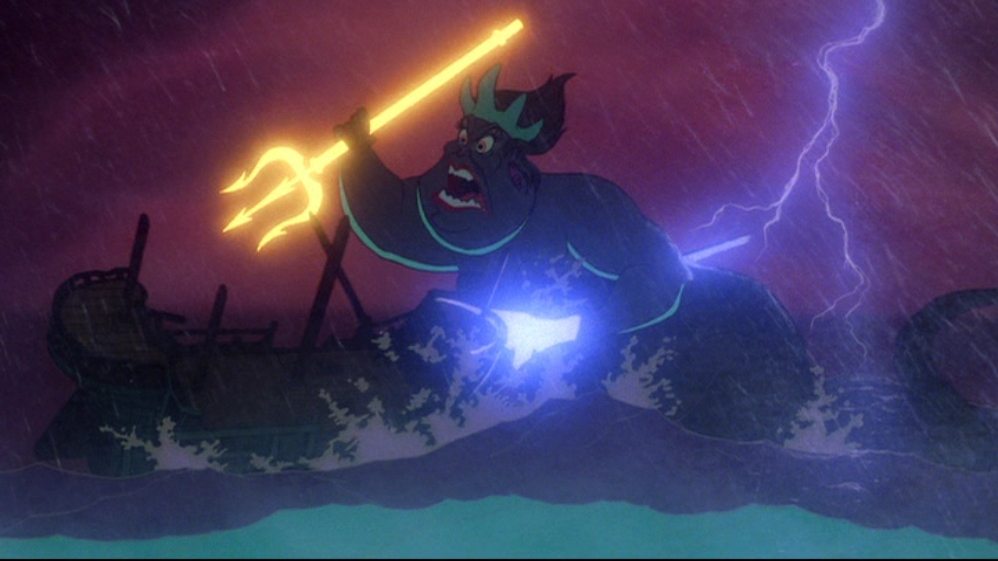
Ursula's Stabbing, 'The Little Mermaid'
Take Ursula's death in 'The Little Mermaid', for example, she's the bad guy of the film, so she has to go somehow. But did she really have to die by getting impaled on the jagged front edge of a sunken ship? And then she gets electrocuted too, just in case you thought she might survive getting stabbed directly in the gut.


Judge Doom Gets Dipped, 'Who Framed Roger Rabbit'
Judge Doom from 'Who Framed Roger Rabbit' is one nasty character. He is the main judge in Toontown and gets his jollies by punishing wrongdoing toons, preferably by killing them with his special Dip substance called.

When it's time for Doom to get his comeuppance, he first gets run over by a steamroller. Then, he stands up, flaps his paper-like limbs on over to an air pump, and blows himself back to relative normalcy. How is he even still alive? As it turns out, he's a toon, just like the ones he's killed with his dastardly Dip.
Thus, we get not only one horrifying death scene for Judge Doom, but two: he inevitably falls victim to his own creation, screaming like a banshee as he melts in a puddle of Dip.


Ray Gets Squashed, 'The Princess and the Frog'
It's one thing when the bad guys get taken down in the final act, but it's much more heart breaking when it happens to one of the good guys. In 'The Princess and the Frog', the talkative Cajun firefly named Ray meets his demise much sooner than anticipated.

What happens to the poor little critter? Well, he gets stomped to death! Never has the crunch of a dead bug brought so many tears!


Emily Binx and the Sanderson Sisters, 'Hocus Pocus'
Though 'Hocus Pocus' is arguably the best and most beloved children's Halloween movie ever made, we can't honestly claim that it's an entirely innocent endeavour. A creepy zombie cuts open his mouth and coughs up dust and leaves, and a cat gets flattened by a speeding bus. But even those scenarios aren't the most disturbing moments in the film!

In the beginning, the Sanderson Sisters kidnap an adorable little girl, tie her up to a chair, and proceed to suck the life-force out of her until her body lies dead and limp. Then, as a punishment for this terrible deed, the three witches are hanged in front of a town full of onlookers. Disney definitely isn't afraid to go dark!


Oogie Boogie Falls Apart, 'The Nightmare Before Christmas'
In Tim Burton's 'The Nightmare Before Christmas,' Oogie Boogie's demise is a rather disgusting one. As Jack Skellington grabs onto one of Oogie's loose strings, his sackcloth "body" unravels to let out his innards - thousands of disgusting bugs.


Ellie Grows Old, 'Up'
Lastly, this Disney death isn't as gruesome as the rest, but it still has the ability to absolutely destroy a viewer's hopes and dreams. Of course I'm talking about Ellie from 'Up,' who kicks the bucket less than ten minutes into the film.

First, though, we're treated to Carl and Ellie's love story. As they grow up, they build a happy life together. Then, Ellie grows old, gets sick, and dies.

Even if they don't get eaten by a wild animal, impaled on a spike, or hanged from a tree in the forest, people get old and die. Thanks for the reminder, Disney!

These are just a few examples of how we are exposed to death from a young age. We shouldn’t be scared to talk about it – even to young children.

There is a range of information available on how to talk to children about death with age appropriate literature. Child Bereavement UK, the Alder Centre, Marie Curie, Macmillan and Liverpool Bereavement Service are just some of the places that could help.

We’re working on a collaborative initiative around Bereavement policies in schools with a number of partners – watch this space for news or contact us if you want to get involved.

Wednesday, 12 June 2013

Everybody Needs Good Neighbours

On the last Friday of May, we headed down to Parklands School in Speke to take part in South Liverpool Housing's Neighbours Day.

We were extremely lucky with the weather - the sun was scorching even at 10am when we arrived to set up!   We had a stall with all of our new merchandise on there; mugs, badges and our brand new tote bags and trolley coins.


Neighbours Day was a brilliant opportunity to meet people living in Speke and the surrounding area, especially people not in a healthcare setting who may not know about who we are and what we do. We gave away all of our bags within half an hour of it being open and had to go back to get more - so if you spot anybody walking around with our logo on a bag, let us know!

There were all sorts of activities going on like a mini funfair, free massages and even a stall with snakes, rabbits and owls being flown about! We got free massages and emerged back to our stall feeling very floppy and relaxed.

We struck up lots of conversations with people who seemed to be mainly tempted by the goodies on our stall... We quickly find that everybody has a personal experience of death or losing someone, and a quick conversation starter like one of our newsletters or a bag can prompt a chat with even people who think the idea is all too morbid at first. That's what our project is all about, and it's so rewarding to see our brightly coloured branding and tongue in cheek newsletter articles doing their jobs well. A particular favourite moment of ours was asking a lovely young boy what he wanted to do before he dies, and expecting him to say something like "own a Ferrari" or "play for Liverpool" he completely shocked us by saying "to make my family happy". Our Community Chalk Wall showed us that quite often people tend to concentrate on family, experiences and happiness rather than gaining material things.

Halfway through the day, Merseyside Police pulled up behind us with their van and laid out all their uniform and riot gear for people to try on... Lucy couldn't resist playing dress up!


It was great to chat to so many people and get our message out there to some local residents. Watch this space for information about events we're attending in the future, pop along and say hello and we might give you one of our highly stylish bags!


Wednesday, 5 June 2013

Before I Die, I Want To...

During Dying Matters week in May, we were very excited to launch something that has never been seen in Liverpool before. We put a chalk wall in an empty shop in the beautiful India Buildings, and asked people to tell us what they want to do before they die.

"Before I Die..." is a project started by artist Candy Chang. She struggled to cope with her bereavement after losing someone close to her, and was looking for a way to channel her grief. She painted the side of an abandoned house with blackboard paint and stencilled it with a grid of the sentence "Before I die I want to________" and left some chalk. People passing by would pick up pieces of chalk and add to the board. By the next day, the board was bursting with people's lift aspirations and wishes of the things they'd like to achieve in their lives. Candy realised she wasn't alone in trying to make sense of her life, and felt a great sense of consolation.

She found that people were asking her to help set one up in their local area, and she began to send out toolkits all over the world. The global Before I Die project was born, with people in all over the world doing their own walls and uploading them to the Before I Die site. There are now over 200 walls in 15 different countries.

We decided that there was no better time to launch one in Liverpool than Dying Matters week. We worked closely with Liverpool Commercial District BID who helped us to secure an empty shop in the beautiful and historic India Buildings on Water Street. Our creative Project Manager Rachael managed to work around the conundrum of not being able to drill an actual chalkboard up anywhere, and made one out of black paper that we could take down and replace when it got full.

We managed to almost fill our wall on the first day it opened, and we noticed that hardly any of the responses related to material things. We'd expected to see "before I die I want to own a Ferrari" or "own designer clothes" but most of what people wrote was about family, happiness and experiences. Some people were reluctant at first to write when gently coaxed by us to come in... but as soon as they had a piece of chalk in their hand they said it had really made them think about the things they'd like to accomplish.

Here are some photos of the two chalk walls we ended up filling before it was closed on 3rd June:


The sign outside our beautiful shop


Mini chalk boards

We have our very own mini site for the chalk wall over at Before I Die, where you can view more photos and a bit about the project: Before I Die: Liverpool

Unfortunately our wall closed on 3rd June. We are currently looking into ways to keep it alive all over Liverpool, and we'd love to hear any ideas if you think you know where we could put one. If you had visited our wall when it was open, what would you have written on there?

Thursday, 30 May 2013

Guest Blog: Stare Death In the Face and Play It Awesome Music

Image © Christina Owen

Here is the first in our series of guest blogs. We're very excited to present a fantastic blog from Christina Owen; ambulance worker, photographer and friend of The Bucket Project:

Stare Death In the Face and Play It Awesome Music
Christina Owen

Sometimes I think about my funeral. I want everyone to wear bright colours and I know exactly what songs I want played too (Good Riddance by Green Day and Take On Me by Reel Big Fish in case you wondered). Cake will be served afterwards and everyone will, of course, cry and say how great I was. It will be a beautiful day, and if the sun doesn't shine then I'd like it to tip it down with rain all day long.

You may think it's a little morbid to picture my funeral when I'm still young and in excellent health (I'm 29 and fit and well). But the truth is that death is often a difficult subject to avoid in my line of work. I work on an ambulance, and I rub shoulders with the sick and the dying most days of the week. Sometimes I stare death in the face, literally. And when you do that for a living, as anyone working in a healthcare profession will know, you develop quite an upfront attitude towards death. Because it's happening, whether we like it or not. At some point, whether it be a long way off or sooner than we think. It's one of those things that no one gets to escape, no matter how long and hard we hunt for a Philosopher's Stone or a really, really good BB cream. It's probably pretty easy to pretend death isn't coming for you in your day to day life - unless you spend your day to day life working in a hospital or like me, on a moving mini-hospital. And then it's a little harder.

So, I plan my funeral in my head and hope that when the time comes, I will write some of it down and have some level of control over it. But I know that really, I could fall down dead and not get a chance to put anything in place. And then an awful song might get played at my funeral and I will have to just live with it (or die with it more accurately). You hear about the slightly comical situation in which a normally healthy person suddenly clutches at their chest and lets out a groan and then turns up their toes without another word. But here's some news you may not expect (and that I certainly didn't expect the first time it happened in front of me): it really does happen. It’s like - a thing. Falling down dead. I'm not saying it's time to start making a will right this second (although you’re never too young and it’s never too early) but it does mean it's okay to think about these things. You like to have a certain level of control over your life, right? After all, it's YOUR life. What about your death? It's really okay to think about these things, and talk about them too. Keeping the subject all taboo and hush-hush isn't going to make it go away.

Sometimes, for fun (!), I sit down and think about what I might die of based on what my grandparents died of. I roped my housemate into this game once too, and the evening ended with us announcing 'heart disease!' and 'cancer!' like we were playing Top Trumps. Then we laughed about it. Because, why not right? If I was suffering with one of these diseases, I like to think I could still laugh about it. Because again, being all sombre isn't going to make it not happen.

In my job, I regularly come into contact with people who are living with illnesses that will eventually kill them. I won't lie - it's difficult to know what to say to them, or what tone to strike. Often, they dictate the tone, and I find that more often than not, they make jokes. Octogenarians (or older!), whether healthy or sick often wag their finger at me as if scolding me and tell me 'don't get old!' and we chuckle, and I say 'I'll try not to!' We smile at each other, and it is usually a sad smile, because one of us knows they have nearly reached the end and the other knows they will one day be in the same boat.

If you CAN see death coming then amid the jokes you may or may not make, it's a good idea to start planning for it. Make a will so that your family are well protected after you've gone. Get a DNAR (Do Not Attempt Resuscitation) if that's what you want, otherwise should you drop dead in the street one Tuesday morning whilst out shopping, green-clad people like me will turn up and start jumping up and down on your chest like there's no tomorrow. You may not want that, and this is where the Do Not Resuscitate Order comes in. It gives you some dignity and it might reassure your family too, so talk to them about it. That way, when we turn up in our ambulance, they can wave the document in our faces, and we'll stand down immediately. Discuss death with your GP. Discuss it with your family and friends. Make the jokes if you want, or be really sombre about it - it's your prerogative. After all, it's YOUR death. And like life, you can approach it how you will. And like life, approach it loudly and unashamedly. Because like life, it WILL happen.

It's okay to be afraid of death. It is scary. I get scared about it every day (and I don't mind admitting this to my patients. After all, there's no point pretending to be a robot, right?). But don't be afraid to talk about it. And don't be afraid to tell everyone what song you want at your funeral, and what sort of desserts you want. Mine is loud American ska-punk and double chocolate. What's yours?

Christina also co-runs a blog at 100Happy, which is all about finding the little moments of happiness in life.

Thursday, 23 May 2013

ALIVE: In The Face of Death

Image © Rankin, with thanks to Walker Art Gallery

"Death; we can deny it and medicine can delay it, but it is life's only certainty. Despite this, it remains the ultimate taboo in British society today"

Yesterday, to celebrate the fact that our birthdays at the Bucket Project fall within days of each other, we took an educational trip to the Walker Art Gallery to have a look at their new exhibition.

ALIVE: In The Face of Death by photographer Rankin is a collection of photographs of people who have been touched by death in one way or another. You might associate Rankin with his photographs of people like Kate Moss, The Queen and Madonna, but this exhibition stems from a personal connection with death that Rankin felt after losing both of his parents. He wanted to confront the fears he had around death. The first thing that hit us when we walked in was how personal and intimate every photograph felt, so far removed from the images of celebrities usually associated with his work.

The contrast of the people featured is stark, ranging from those who are faced with terminal diagnoses to those who have survived tragedies like the London bombings of July 2007, and people who work within the death industry. We particularly loved this image of local lads Sam and Dan Lloyd, who both have muscle wasting disease Duchene muscular dystrophy. They have a life expectancy of around 25, but at 17 they exude such a love for life and passion we couldn't help but feel really inspired by them. Even Rachael, the Blue half of The Bucket Project, felt like she could get on board with their football passion despite it being for Liverpool FC!

Image © Rankin, with thanks to Walker Art Gallery
We loved the photographs of Rankin with his face painted like Mexican Day of the Dead masks, all in bright colours and beautiful designs. It evoked the ideas of death being a celebration and not something to fear, of it being a gateway to something else entirely that could be brightly coloured and beautiful; a far cry from the monochrome funereal images we often see when thinking of the ways we remember the dead.

Image © Rankin, from Liverpool Echo

There were two particularly interesting parts of the exhibition that made us think. On one wall is a collection of "life masks" - masks of living celebrities cast in the style of ancient Egyptian death masks. It was haunting to see imagery usually associated with the dead juxtaposed with people who are very much alive, including contemporary celebrities such as Joanna Lumley and Abbey Clancy. On the opposite wall is a collection of portraits of people working in the "death industry" such as a grave digger, a palliative care consultant and most interestingly a group of Ghanian professional mourners. We didn't even know that professional mourners existed, and it was eye opening to learn about the funeral traditions of other cultures.

The exhibition is breathtakingly powerful. The way Rankin presented his subjects in ways that were personal to their own battles was evident in each portrait. 23 year old Fran wanted to be photographed with butterflies because "They move so effortlessly and so gracefully…they’re the opposite of me. They’re free, whereas I’m not", and Sandra Barber wanted to portray her inner warrior to show the strength she had drawn from to fight breast cancer. Every single photograph has a detailed story beneath it, and it's impossible not to feel incredibly humbled and inspired by the outlooks these people have developed to cope with the enormity of being touched by death.

Outside the exhibition is a wall covered in brightly coloured Post It notes from visitors, sharing their views on the exhibition. It was fantastic for us to see people talking about death so openly, especially the people who wrote that it had made them think or talk about death for the very first time.

Me (Lucy) writing on the response wall
We definitely recommend that you catch this exhibition before it finishes in September. If we were to sum up the entire essence of our project in one room, this exhibition would most definitely be it. Seeing death personified in the faces of people who have come close to it and even lost their fear of it was certainly an empowering experience.

If you do end up going to see it, be sure to let us know what you thought.

ALIVE is at the Walker Art Gallery, Liverpool until 15 September 2013.
#AliveXRankin

Tuesday, 21 May 2013

#AfterIDie

Image credit: http://blog.snapapp.com

Have you ever thought about what happens to your social media accounts after you die?

If you watched this year's installation of Charlie Brooker's Black Mirror back in February, you might have seen the episode "Be Right Back" featuring a pretty futuristic account of how technology could keep our loved ones alive after death. It follows a bereaved young widow in the days after the untimely death of her husband, who is offered a digital device that acts and talks just like her husband did, based on his Facebook posts and Tweets. She starts slowly by having online conversations with her "husband", as the programme creates algorithms to reply in the same way as he would have when alive by scanning through all of his previous online posts and imitating his personality. She becomes so addicted to this contact with her late husband that she eventually goes a step further and orders a real life, walking talking replica of him to relieve her grief.

Most of Charlie Brooker's fantastical ideas are close enough to the bone to make us think differently about modern society, yet far enough removed to remain impossible... but it seems like this isn't as distant as you might think.

Apps like DeadSocial and LivesOn have been built to ensure your digital legacy lives on after your passing. With scary similarity to that episode of Black Mirror, LivesOn actually does scan all of your previous Tweets and continues to Tweet in your "style" after you die.  It analyses your tastes, things you like and even your syntax. You can test it whilst you're alive, guiding it to provide more accurate Tweets, then appoint an Executor of your account who can notify LivesOn you've died and start the post-death Tweeting. DeadSocial works slightly differently in that you control the content that is posted after you die, as you create a series of messages to be sent out posthumously to friends and relatives.

There is debate from psychologists about the effect this might have on the bereavement process. Would you embrace this if you lost a loved one as a way to keep their memory alive? Would this help your grief by making the transition easier and less abrupt, or do you think it could be damaging to the grieving process and the adjustment to life without the person who has died?

Without these services, what happens to our social media services when we die is a bit of a grey area. Giving your passwords to relatives violates most websites' terms and conditions, and some advise against putting passwords in your Will because they can become public property and could be accessed by anybody. Currently Facebook has an option to memorialise accounts of the deceased so that it can be a place of remembrance and people can still continue to post messages on their wall, like a digital grave. However, the process can be lengthy and requires proof of identity that family members may not want to have to deal with at an already distressing time.

What do you want to happen to your social media accounts when you die? Do you agree with apps posting on your behalf? Whatever you decide, it's good to have a think about how you'd like your online accounts to be managed after you die - and there's no time like the present.