Showing posts with label dying. Show all posts

Friday, 16 December 2016

Goodbye 2016 and Hello 2017

We come to the end of 2016 with mixed feelings. The two-year extension we were so pleased to announce in our End of Year 5 Report has now been rescinded by our funders, Liverpool Clinical Commissioning Group (CCG). They are facing budget cuts, like a lot of other sectors, and are reviewing all of their services and the projects they fund. At the moment, we are safe until March 2017, but are anxiously waiting to hear the outcome of the review in the new year.

Rachael McMeacock, Project Manager of The Bucket Project, receiving her 5 year service award

The positive news is we are still moving forwards with the work of Compassionate Cities/Communities and are leading a task and finish group to develop this initiative. This could prove all the more important with the cuts facing health and social care services, where we will need the community to step in to support those that are dying, their families and carers as well as the bereaved. The Telegraph recently printed a story about a similar initiative, which you can read here

As part of this work, we have been compiling a list of end of life and bereavement organisations across Liverpool as well as collecting case studies to help others plan and prepare for end of life and death. If you have a story to share, we’d love to hear it. Read some of the stories we have collected so far here.

Both the Helper Service and Our Time Liverpool, a time banking project, are involved with the task and finish group. They have been sharing their expertise and best practice models to help develop the direction of this work. We also have a great mix of people from a range of backgrounds who bring a wealth of personal and professional experience to the group, and we thank them all for their contributions. 


We hope to have established firm foundations for a Compassionate Liverpool before the potential end of The Bucket Project. If you would like to get involved or support Liverpool in getting this status, please get in touch.

You can find out more about Compassionate Communities, Compassionate Cities, Marie Curie’s Helper Service and Our Time Liverpool by clicking the highlighted text.

We would like to wish you all a merry Christmas and a happy New Year. We hope that 2017 brings us good news and the opportunity to continue working with the people of Liverpool. Look after each other, be kind and take care.


 Image taken from Desktop Nexus

Monday, 27 July 2015

Analysis of 4ft Lettering: Dying Matters 2014

After Dying Matters Awareness Week 2014, The Marie Curie Institute undertook an analysis of our display at The Walker Art Gallery. Members of the public were invited to ‘Write or draw what symbolises ‘Life’ and ‘Death’ to you on our Hollywood style lettering’. The aim of the analysis was to gain an insight into peoples’ perceptions of death (and life) in order to inform public engagement techniques to normalise the topic of ‘death’.
 
Here are some excerpts from the findings:

Background

Within the context of Western Society, advances in medical science have simultaneously reduced the incidence of childhood and early adult deaths and extended life expectancy. One result of such advances has therefore been to delay personal experiences of death and dying into midlife (House of Commons Health Committee, 2015). Further, since the foundation of the National Health Service (NHS) in the United Kingdom (UK) in 1948, an increasingly paternal, medicalisation of death and dying has resulted in more deaths now commonly occurring in a hospital setting, which has further removed ‘death’ and ‘dying’ from general society (House of Commons Health Committee, 2015; Mellor and Shilling, 1993).
 
The philosophical underpinnings of the meaning of 'life' and 'death' have been much debated over time. 'Meaning of life' seeks to understand the purpose of human existence within a broader metaphysical context over and above individual human contributions (Horne, 2013). Given the shift towards an individualistic focus this makes ‘meaning of life’ contemplations difficult in a traditionalist/religious vacuum. ‘Meaning in life’ on the other hand could be expressed in terms of subjective views that individuals' lives have purpose through the activities undertaken, which may provide pleasure and happiness (Wolf, 1982; Sigrist, 2015).
 
In May 2014, the National Museums Liverpool (NML) hosted an interactive, public exhibition, consisting of individual lettering, spelling ‘LIFE’ and ‘DEATH’. Members of the public were invited to write comments directly on to the lettering and these comments and illustrations were recorded verbatim and made available to the Marie Curie Palliative Care Institute Liverpool (MCPCIL) at the University of Liverpool to enable a form of qualitative Content Analysis of these public contributions to be undertaken.
 

The aim of this report is to provide a qualitative analysis of these contributions (written and illustration) in order to gain an insight into peoples’ perceptions of death (and life) with the purpose of informing future public engagement techniques to ‘normalise’ the topic of ‘death’. As previously discussed, it is envisaged that contributions will be more focused on ‘meaning in life’ than ‘meaning of life’. Further, those contributions to ‘what symbolises ‘life’’ will include but may not be limited to: purposefulness; happiness; self-actualisation; youthfulness; and health. Similarly, it is envisaged those contributions to ‘what symbolises ‘death’’ will include but may not be limited to: ambiguity; fear; frailty/old age.

Engaging the public

The Bucket Project representatives were present for an hour or more each day that the exhibition was active and they engaged in conversations with the public about the Bucket Project, Dying Matters and the lettering display. They gave a background to the project and inquired whether people would like to contribute. Other people also contributed to the display without personally talking to the representatives, though they may have taken leaflets/newsletters from the display stand.

The results of this content analysis concur with the hypothesis in that the written contributions largely related to ‘meaning in life’ over ‘meaning of life’ reflecting a priority of purpose for individuals over broader human existence perspectives. This focus on the ‘self’ was evident by the significant proportion of written contributions which reflected individuals’ names. Whilst these were reflected on both ‘life’ and ‘death’ lettering they were more frequently noted on the latter, which may support the individualistic ‘meaning in life’ perceptions in a reduced traditionalist/religious framework.
 
Similarly the frequency of the acronyms ‘YOLO’ (i.e. You Only Live Once) on both lettering and ‘YODO’ (i.e. You Only Die Once) on ‘death’ lettering could provide additional support for a shift of focus to ‘meaning in life’, prioritising ‘life’ over ‘death’. These acronyms are examples of the type of language adopted largely within more recent technological communication, and are arguably more synonymous with younger individuals.

A proposed youthful demographic of a proportion of the participants to this exhibition is also supported via the use of ‘emoji’ and ‘hashtag’ punctuation across both ‘life’ and ‘death’ lettering which again reflect more recent language style adopted largely within technological communications.
The hypothesis that written contributions to ‘life’ lettering would incorporate purposefulness, happiness, and self-actualisation comments is also supported by this data analysis. Those written contributions relating to ‘happiness’ were the most frequently reported category within this lettering. ‘Purposefulness’ and ‘self-actualisation’ were largely reflected within the category entitled, ‘purpose to life’. Examples include: ‘Be, all, you can possibly, be’; ‘Fullfill your life to the fullest’; ‘Life is all about people - you are who you spend time with’.  The remaining significant category within the ‘life’ lettering related to ‘Friends/Family’. Within the literature connectedness to others is subsumed within descriptions of potential purposeful activities that may provide happiness. Therefore this category provides additional support that the current focus is towards individualist ‘meaning in life’ perspectives incorporating purposefulness, happiness, and self-actualisation ideologies.
 
Contrary to our earlier hypothesis, however, neither ‘youthfulness’ nor ‘health’ were represented within the written contributions provided for the ‘life’ lettering. However, given that the demographic of the visitors to this exhibition may have included a significant proportion of young people this may explain why these categories did not feature, as the young are synonymous with ‘youthfulness’ and ‘health’, the mindfulness of which may only be encountered when these natural qualities start to ebb.
Whilst the category representing ‘unclassified’ written contributions was reflected within both the ‘life’ and ‘death’ lettering, it was significantly represented in the latter (i.e. 10% - 3 times greater representation within ‘death’ than ‘life’ lettering). Examples of these written contributions include: ‘Look out for drowning people! Lol’; ‘Pomegranete    Izzy’; ‘To enjoy your death... After all they have cookies! Eve S THS’. As these examples show, these comments are diverse and ambiguous in meaning. It could be argued that the greater frequency of this category of comments within the ‘death’ lettering reflects public ambiguity about death and dying, in line with aforementioned literature, and is therefore supportive of the hypothesis that ambiguity will be a feature within the written contributions reflecting perceptions about ‘death’.

Interestingly, however, the illustrations accompanying some of the written contributions followed more traditional categorisation, whereby ‘life’ was depicted by  ‘positivity’ (i.e. chick, happy face, smile, the sun) and ‘love’ (i.e. heart, kiss, people) whilst ‘death’ illustrations represented traditional death imagery (i.e. skull, bomb, flower, ghost), love (i.e. broken heart, heart, people) and sadness (i.e. sad face). Whilst imagery can promote universal messages and meaning, specific detail regarding such meaning can be compromised and limited by the artists’ abilities, which may explain the basic illustrations and their more traditional nature in relative comparison to the written contributions.
Conclusions

In support of the aforementioned literature, the analyses concur that the written contributions focused more so upon ‘meaning in life’ over ‘meaning of life’, suggestive of a reduced focus upon traditional/religious frameworks to support existential meaning. Further, those contributions to ‘what symbolises ‘life’’ included expected categories of: purposefulness; happiness; and self-actualisation. Similarly, those contributions to ‘what symbolises ‘death’’ included ‘ambiguity’. Contrary to our earlier hypothesis neither ‘fear’ nor ‘frailty/old age’ were representative categories within the contributions provided for the ‘death’ lettering. However, comments with more negative connotations were recorded within these contributions.

These results suggest support for the previously argued theory regarding the privatisation of death and dying and ensuing individualist perception and experience afforded death and dying. Future public engagement exercises should aim to reduce the ambiguity regarding death and dying and to find ways to initiate social discourse.
 
For more information on this analysis email amy.king@mariecurie.org.uk

Monday, 20 July 2015

Make Your Wishes Known


Whilst listening to a popular radio programme, I heard a feature that indicated the amount of organ donors has decreased for the first time in a number of years. I thought that it would be helpful to include some of the information we have recently produced and collated from a number of leading sources on organ donation. It is important to make your wishes known and to record them or you may not be able to donate, even if you want to.


Excerpts from our ‘5 Things To Do Before You Die’ booklet:
 
Modern medicine has made it possible for us to donate healthy organs and tissue to those in need after we have died. Transplants depend on the generosity of donors and their families who are willing to donate to enhance the quality of someone else’s life. It is possible that one donor can save or improve the lives of a number of people.
 
Why it is important to make a decision

Deciding whether or not to become an organ and/or tissue donor is an important personal decision. If you think this is something you would like to do, it is a good idea to add your name to the organ donor register and share your decision with close relatives or friends. If you are not registered, when you die, your next of kin will be asked whether you would have wanted to be a donor so it is essential that they understand your wishes.
 
By joining the register you are giving legal consent to the use of your organs and tissue for transplantation after your death if you are considered as a viable donor.
 
Exceptions

There are certain exceptions that may prevent you from becoming an organ donor, such as being diagnosed with HIV or CJD (a brain condition). If you have other medical conditions you can still join the register and a doctor will determine if your organs are suitable for donation. Becoming part of the register does not necessarily mean you will become a donor as this depends on the viability of the organs and circumstances of death. But the more people that join the register, the higher the chances of helping someone in need.
 
It is possible for you to specify which organs you are willing to donate if there are certain elements you are not comfortable with them taking. You must tick the appropriate boxes on the organ donor registration form or donor card in these circumstances. In the case of cornea donation there is currently an upper age limit of 80 years, and for the donation of heart valves and tendons there is an age limit of 60 years. However, there is no upper age limit for joining the register to donate other organs and tissue, viability is determined by condition.
 
You can join the NHS Organ Donor Register by:
 
• Filling in a form online at www.organdonation.nhs.uk
• Calling the NHS Donor Line on 0300 123 23 23
(lines are open 24 hours a day all year, charged at your local rate)
• Text SAVE to 62323
 
You can also join when you:

• Register for a driving license
• Register at a GP surgery
• Register for a European Health Insurance Card (EHIC)
• Apply for a Boots Advantage Card
 
Make sure your family and loved ones are aware of your decision.
 
For more in-depth information, please visit the NHS Organ Donation website listed above. There is a comprehensive list of frequently asked questions and guidance on how to join.

Monday, 18 May 2015

Launch of Dying Matters Awareness Week 2015: Talk, Plan, Live

Today is the national launch of Dying Matters Awareness Week 2015. Here in Liverpool we would like to officially introduce our awareness poster campaign and ‘5 Things To Do Before You Die’ booklet, which contains an overview of key actions you should think about taking in preparation for the future.
 
See our posters below:


Find out more about the booklet by viewing the ‘5 Things’ tab. Alternatively, you can download the booklet from our ‘Downloads’ page.
 
 
We have an exciting week ahead with events taking place on Wednesday, Thursday and Saturday (click HERE to see what’s happening!). All of our events are free of charge, so head on down and Talk, Plan, Live!

Thursday, 23 April 2015

Impact Survey

The Bucket Project began engaging the community of Liverpool around the topic of death in 2011 and are currently funded until March 2016. As we progress, we need to develop different ways to monitor our impact and effectiveness.

If you are aware of The Bucket Project, have attended an event, picked up a newsletter or found us online - we ask you to spare 5 minutes of your time to complete our Impact Survey, either online by visiting Survey Monkey or downloading the document from our Downloads page and returning to us either by post or email.

Your 5 minutes could help us evidence the need for an engagement project like ours, which helps people become more comfortable talking about end of life and death. We can also find out what works best, and what doesn't, so we can make the best use of our time.

Thank you in advance. Even by reading this far means that The Bucket Project has reached you.

Monday, 10 November 2014

In Flanders fields the poppies blow…

Image taken from p2p.biplin.com
Tomorrow is the 96th Anniversary of the end of the First World War and thousands of people across the country have already paid their respects through attending services and memorials on Remembrance Sunday. Being the Centenary, 100 years since the start of WWI, it feels even more poignant to remember those who gave their lives to protect the world that we live in today.
 
In 1918 on the 11th November, the eleventh month, an Armistice was signed between Britain and Germany, effectively ending the First World War with a ceasefire at eleven o’clock. It is hard to imagine the suffering of not only those who fought in the war, but the families who lost loved ones, often more than one. There are still people today who grieve the loss of the brave men and women who are fighting in conflicts abroad and they will certainly be in our thoughts tomorrow too. 
 
A Beautiful Remembrance Sunday service was held yesterday in Liverpool City Centre at the Cenotaph, with a parade of ex-servicemen marching and applauded by the crowd. It was wonderful to see so many people show their respects and gather together as a community to support each other in their loss and grief, whether personal or on a national scale. One of the most emotional and striking moments was the release of thousands of red poppies from St Georges Hall, cascading down over the crowd. They represented all the lives lost in World War One, which really put in to perspective the loss of life on such a large scale. It is no wonder we can often find it difficult to talk about death when generations before us lost so many people close to them.
 
Poppies released from St George's Hall
 
Many families will have been directly affected by the World Wars with some even having parents and grandparents who fought. My Great-Grandfather was born in 1899, and fought in the First World War. In May 1918, at the age of 19 he was captured at the 3rd Battle of Aisne, in France. Presumed missing or dead, his family were informed and I can only imagine the pain and heartache felt by his Mother in that moment. In this case, he managed to survive and made it home in 1919, but for many others this was not the outcome. As I have mentioned, for some this is their reality today, waiting for news and hoping this isn’t the day that their world falls apart. Please spare two minutes tomorrow and keep past and present families and servicemen and women in your thoughts.
 
My Great-Grandfather Stanley Charles Hayward 1899-1985
 
There is a short service at the Cenotaph in Liverpool City Centre tomorrow, November 11th at 11am for two minutes silence. We will never forget.

 
Image taken from liverpoolecho.co.uk


Wednesday, 5 November 2014

Celebration Success!

Our Day of the Dead Altar @ Maya
The Day of the Dead Celebration on Sunday was a fantastic success. A number of wonderful people turned up with beautiful photographs of loved ones they have lost. They placed them on our altar surrounded by flowers and food offerings to celebrate and share stories of their departed loved one’s lives.
 
Some of the beautiful photos brought by attendees to the celebration
 
Once everyone became acquainted and enjoyed the delicious food at Maya and our homemade cookies and cupcakes, we each chose a card from our Dead Good deck of cards. Images on the cards relate to a subject surrounding death, dying and loss which people presented their interpretations of and shared personal experiences with the group.
 
It was inspiring to listen to the stories of people who have dealt with such loss and grief but manage to bring a positive and heart-warming outlook through sharing touching memories of those they have lost. Part of a discussion I was involved in brought up an interesting point about how uncomfortable people can feel when remembering funny instances and events in a deceased person’s life; that it is somehow disrespectful to speak about these moments. However, more than one member expressed that sometimes wit and comedy were at the heart of the loved one’s personality and pushing aside these memories is denying a part of who the person was.
 
Some of our lovely attendees
Day of the Dead teaches us that whilst we are hit with tremendous grief at the loss of someone close, through sharing stories, we can keep their memories alive and remember how they touched our lives.
 
At the end of the celebration, we all shared a tequila toast to the loved ones who have passed. In that moment it was comforting to know that whilst all of our experiences with death are unique and individual to us, we all experience it in one way or another.
 
Tequila toast
 
The Bucket Project would like to thank everyone who attended the celebration.

Friday, 13 June 2014

It's Friday 13th!

Image from ravenblackcat.com
Batten down the hatches, the most superstitious day aside from Halloween, Friday the 13th is upon us. Not only has the supposed ‘unlucky’ 13th landed on a Friday, but it just so happens to coincide with a full moon, which won’t happen again until August 2049! Legends dictate that a full moon on Friday 13th will create the most misfortune and be the unluckiest day of the year. Many people will be too terrified to even leave the comfort of their own homes today as there are a number of superstitions attached to this date. Having a fear of Friday 13th is called Paraskevidekatriaphobia.

The origins of the superstitions surrounding this date are unknown, but attributed to a variety of possible sources worldwide. The number 13 is regularly thought of as unlucky, which may have a religious explanation.  There were 13 guests at the last supper, where Judas betrayed Jesus, who was supposed to have been crucified on a Friday. It was also speculated that Cain killed his brother Abel on Friday 13th, possibly giving an explanation for death and misfortune being closely linked with the date. A quirky interpretation is that numerologists view the number 12 as a ‘complete’ number (12 months in a year, 12 apostles etc.) which then makes 13 unnerving and ‘incomplete’.

There are many other mythical explanations for the unlucky association with 13. In Nordic myth, 12 gods attending a party were interrupted by a 13th, Loki an evil God who caused the death of a member of the group. In Chaucer’s Canterbury Tales, Friday was referred to as a very misfortunate day and was reportedly ‘hangman’s day’ in Britain creating an explicit link with death.

Similarly, there are a number of superstitious beliefs attached to a full moon, some are positive such as asking a full moon for money in your wallet will supposedly bring you wealth. Though famously, the full moon has been used in works of science fiction as a trigger for supernatural beings such as werewolves to transform and wreak havoc in the world. Many superstitions surrounding the full moon coincide with those of Friday 13th. Check out this list below of popular superstitions and spooky ‘facts’:

-    A haircut on Friday 13th will cause a family death
-    A passing funeral procession on Friday 13th means you will be next
-    It takes 13 witches to form a coven
-    Sleeping under a full moon will mean serious harm or death
-    Tarot card 13 is the death card depicted by a grim reaper
-    If 13 people sit at a table, the first to leave will die
 
Image from gaizy.hubpages.com
So why are we obsessed with death and superstition? People purposely avoid driving and other activities on Friday 13th as they truly believe it is a day full of misfortune and danger. These beliefs seem so rooted in modern society that many high rise and apartment buildings to this day omit the 13th floor and some airports do not have a 13th gate.

A psychology professor, Stuart Vyse suggests "If nobody bothered to teach us about these negative taboo superstitions like Friday the 13th, we might in fact all be better off”. Interestingly this statement applies to the taboo surrounding talking about death. Children are very matter of fact when it comes to this subject; it is only when as adults we impose our fears and superstitions on younger generations that issues become forbidden and taboo. One superstition that affects many people is the idea or fear that talking about death will make it happen sooner; in a sense you are ‘tempting fate’. But this is simply not true. Death is not a subject that we should think or talk about all the time, we should enjoy and make the most of life, however, we should not be afraid to discuss such an important topic and prepare for that certain eventuality we all will face.

Thursday, 24 April 2014

Pet Remembrance

Here is another intriguing excerpt from our latest newsletter:
 
Pets are an important part of many households, often becoming a member of the family. When they pass away, we want to honour them, much like we do with human loved ones. You might be surprised, but there is almost as wide a range of options for animals as there is for people.

This isn’t a modern practice; we have been burying and remembering our furry friends for thousands of years! Have you given thought to how you will remember your pet and how they will be laid to rest?

Take a look at these weird and wacky ways that animals have been honoured after death:
 
Mummified Moggies
In ancient Egypt, cats were seen as mysterious and were linked with certain deities. Sometimes owners would mummify their deceased cats in the hope they would join them in the afterlife. Others were used as offerings to their god or goddess counterparts and buried in cat cemeteries. These weren’t the only animals to be preserved by the Egyptians, dogs and birds have been found mummified and stored inside pots.
 
Image from newsdesk.si.edu

Man’s Best Friend
In the Middle Stone Age in Scandinavia, roughly 6,000 years ago, some of the first cemeteries were created and they included dogs! The graves of the hounds were remarkably similar to the human ones, showing they were loyal companions even then.
The ‘Perpetual Pet’
Some people can’t bear to part with a beloved pet, well there’s no need to in this day and age with specialised freeze-dry pet preservation technology. The deceased are put through a specialised process for up to 6 months and returned to their owner perfectly in tact and preserved in their natural state ready to re-join the household.

Extravagant Equines
Cats and dogs aren’t the only animals that people have lovingly buried in the past. Some people experience lifelong bonds with horses, with spectacular burials being discovered across the world. In China there were chariot burials and in the ancient Pazyryk Culture in Russia they elaborately adorned their horses and buried them with their riders when dead.
 
Image from pinterest.com
 
 
You can download the full newsletter here!

Monday, 17 March 2014

Schools Carousel a Roaring Success

Last week we visited a primary school on a ‘schools carousel’ to talk to children about our jobs and to give them a chance to ask us any questions they may have. We were accompanied by a number of different representatives of businesses and public services, all interested in helping children find out information about their careers.

However, we were initially concerned about talking to children about death and dying and wanted to do so in an appropriate way. The response from the children was remarkable; they were open about the subject and actively engaged in a ‘name the animal skeleton’ quiz which they of course, found fascinating. They were extremely excited to write on our ‘bucket list’ postcards with chalk and discussed not only career aspirations but things that they would like to do in their lives, from deep sea diving to swimming with sharks!
 
Bucket List Postcard
 
Whilst many of the questions they asked regarded salary or length of working hours, there were a few fantastic questions such as ‘do you find your job emotional?’, which demonstrated that children are far more aware of issues surrounding death than adults often give them credit for.

As adults, we are reluctant to talk to children about the subject of death and dying, in an attempt to ‘protect’ them. However, this venture proved that children are resilient and do not approach these topics with the same taboo attitude that is ingrained in to adults in Western society. Of course it is always important when talking to children about death to adhere to appropriate conversation, but it should not be avoided and brushed under the carpet.  Through talking openly about death at a younger age it will ultimately make it more normal and lead to better awareness of end of life care options for people with terminal illnesses.
 
Death in Disney Films
Image from clubecandoca.com
 
Death can be a scary subject, but it happens to us all. Every day children see death and dying in Disney films, cartoons and video games, so we shouldn’t be afraid to talk about it with them. For an interactive and light way to introduce the topic, why not head down to one of our events at the World Museum during Dying Matters Awareness Week, from the 12th – 18th May. There will be ‘Meet the Mummy’ sessions for both adults and children on Saturday the 17th at 1pm, 2pm and 3pm and a ‘Day of the Dead Drop In’ from 1-4pm on Sunday the 18th. It was inspiring to see one little girl in particular, frantically writing down the dates of these events; she will no doubt be asking her parents to take her there! And we hope to see you there too!
 
For more information on events we are hosting in Dying Matters Awareness Week, contact us at amy.king@mariecurie.org.uk or find us on Facebook and Twitter.

Tuesday, 28 January 2014

Journeys and Developments

I am pleased to announce we will soon be launching a new page on the blog, which will feature guest reviews of films, books and events with themes regarding death, dying and loss. If you would like to get involved and have your review featured, email your name and review to Amy.King@mariecurie.org.uk or contact us via Facebook or Twitter. 

Image from abucketlist.com
We have also recently uploaded our ‘Attitudes toward Death, Dying and Loss’ survey to the blog, which you can find under ‘Downloads’ or fill in online by clicking HERE.

As you may know, yesterday was Holocaust Memorial Day. People across the country attended events in remembrance of the persecution of Jewish and other communities by Nazi Germany in the Second World War. They also gathered to remember the 20th anniversary of the genocide that took place in Bosnia in 1994. 

The national theme this year was Journeys. There are millions of individuals who were affected by the holocaust and each of them had their own experiences and journeys through horrific times. It is important for future generations to remember and recognise that these events can never happen again. However, there is still discrimination and injustice happening in the world every day, which we should remember not only on a designated date but all year round.

Image from www.liverpoolecho.co.uk
The Museum of Liverpool hosted a special day of events to mark the Holocaust Memorial on Sunday 26th January. Although this event has been and gone, year round you can explore Jewish Community history in Liverpool through a self-led trail around the museum.

What did you do for Holocaust Memorial Day? Let us know at @Bucket_Project

Monday, 17 June 2013

From Our Newsletters: Disturbing Disney Deaths

Did you know we have a series of newsletters you can download from the Newsletters tab? Every so often we will re-post an article from past newsletters. Here's one from our Spring 2013 edition about the dark side of Disney films...

Disturbing Disney deaths 

You might think that kids' movies would gloss over the less pleasant sides of life, in an effort to shelter children's innocence for a little while longer. But Disney has other ideas! Death is a common theme in many Disney films, and sometimes those deaths are pretty brutal.


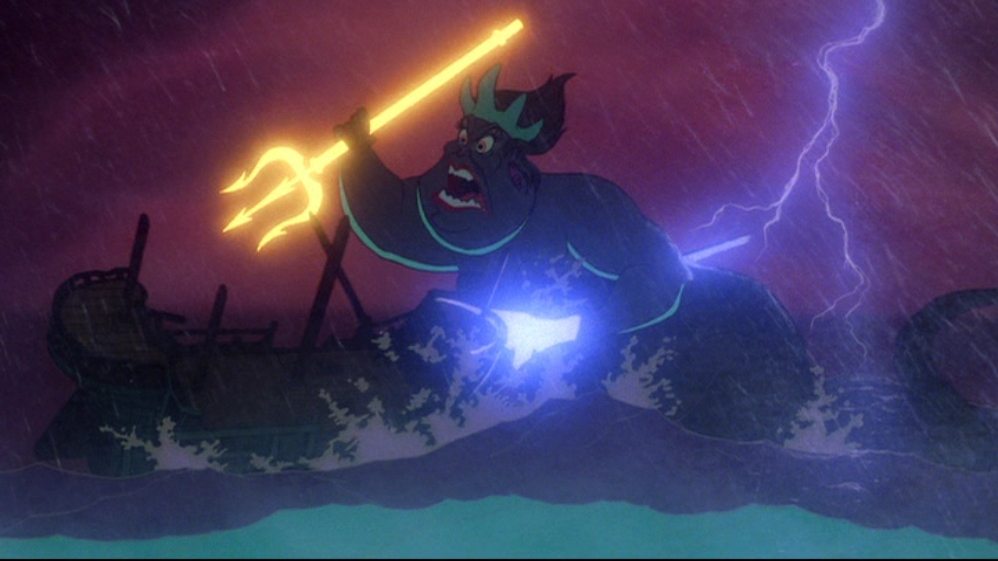
Ursula's Stabbing, 'The Little Mermaid'
Take Ursula's death in 'The Little Mermaid', for example, she's the bad guy of the film, so she has to go somehow. But did she really have to die by getting impaled on the jagged front edge of a sunken ship? And then she gets electrocuted too, just in case you thought she might survive getting stabbed directly in the gut.


Judge Doom Gets Dipped, 'Who Framed Roger Rabbit'
Judge Doom from 'Who Framed Roger Rabbit' is one nasty character. He is the main judge in Toontown and gets his jollies by punishing wrongdoing toons, preferably by killing them with his special Dip substance called.

When it's time for Doom to get his comeuppance, he first gets run over by a steamroller. Then, he stands up, flaps his paper-like limbs on over to an air pump, and blows himself back to relative normalcy. How is he even still alive? As it turns out, he's a toon, just like the ones he's killed with his dastardly Dip.
Thus, we get not only one horrifying death scene for Judge Doom, but two: he inevitably falls victim to his own creation, screaming like a banshee as he melts in a puddle of Dip.


Ray Gets Squashed, 'The Princess and the Frog'
It's one thing when the bad guys get taken down in the final act, but it's much more heart breaking when it happens to one of the good guys. In 'The Princess and the Frog', the talkative Cajun firefly named Ray meets his demise much sooner than anticipated.

What happens to the poor little critter? Well, he gets stomped to death! Never has the crunch of a dead bug brought so many tears!


Emily Binx and the Sanderson Sisters, 'Hocus Pocus'
Though 'Hocus Pocus' is arguably the best and most beloved children's Halloween movie ever made, we can't honestly claim that it's an entirely innocent endeavour. A creepy zombie cuts open his mouth and coughs up dust and leaves, and a cat gets flattened by a speeding bus. But even those scenarios aren't the most disturbing moments in the film!

In the beginning, the Sanderson Sisters kidnap an adorable little girl, tie her up to a chair, and proceed to suck the life-force out of her until her body lies dead and limp. Then, as a punishment for this terrible deed, the three witches are hanged in front of a town full of onlookers. Disney definitely isn't afraid to go dark!


Oogie Boogie Falls Apart, 'The Nightmare Before Christmas'
In Tim Burton's 'The Nightmare Before Christmas,' Oogie Boogie's demise is a rather disgusting one. As Jack Skellington grabs onto one of Oogie's loose strings, his sackcloth "body" unravels to let out his innards - thousands of disgusting bugs.


Ellie Grows Old, 'Up'
Lastly, this Disney death isn't as gruesome as the rest, but it still has the ability to absolutely destroy a viewer's hopes and dreams. Of course I'm talking about Ellie from 'Up,' who kicks the bucket less than ten minutes into the film.

First, though, we're treated to Carl and Ellie's love story. As they grow up, they build a happy life together. Then, Ellie grows old, gets sick, and dies.

Even if they don't get eaten by a wild animal, impaled on a spike, or hanged from a tree in the forest, people get old and die. Thanks for the reminder, Disney!

These are just a few examples of how we are exposed to death from a young age. We shouldn’t be scared to talk about it – even to young children.

There is a range of information available on how to talk to children about death with age appropriate literature. Child Bereavement UK, the Alder Centre, Marie Curie, Macmillan and Liverpool Bereavement Service are just some of the places that could help.

We’re working on a collaborative initiative around Bereavement policies in schools with a number of partners – watch this space for news or contact us if you want to get involved.

Wednesday, 12 June 2013

Everybody Needs Good Neighbours

On the last Friday of May, we headed down to Parklands School in Speke to take part in South Liverpool Housing's Neighbours Day.

We were extremely lucky with the weather - the sun was scorching even at 10am when we arrived to set up!   We had a stall with all of our new merchandise on there; mugs, badges and our brand new tote bags and trolley coins.


Neighbours Day was a brilliant opportunity to meet people living in Speke and the surrounding area, especially people not in a healthcare setting who may not know about who we are and what we do. We gave away all of our bags within half an hour of it being open and had to go back to get more - so if you spot anybody walking around with our logo on a bag, let us know!

There were all sorts of activities going on like a mini funfair, free massages and even a stall with snakes, rabbits and owls being flown about! We got free massages and emerged back to our stall feeling very floppy and relaxed.

We struck up lots of conversations with people who seemed to be mainly tempted by the goodies on our stall... We quickly find that everybody has a personal experience of death or losing someone, and a quick conversation starter like one of our newsletters or a bag can prompt a chat with even people who think the idea is all too morbid at first. That's what our project is all about, and it's so rewarding to see our brightly coloured branding and tongue in cheek newsletter articles doing their jobs well. A particular favourite moment of ours was asking a lovely young boy what he wanted to do before he dies, and expecting him to say something like "own a Ferrari" or "play for Liverpool" he completely shocked us by saying "to make my family happy". Our Community Chalk Wall showed us that quite often people tend to concentrate on family, experiences and happiness rather than gaining material things.

Halfway through the day, Merseyside Police pulled up behind us with their van and laid out all their uniform and riot gear for people to try on... Lucy couldn't resist playing dress up!


It was great to chat to so many people and get our message out there to some local residents. Watch this space for information about events we're attending in the future, pop along and say hello and we might give you one of our highly stylish bags!


Wednesday, 5 June 2013

Before I Die, I Want To...

During Dying Matters week in May, we were very excited to launch something that has never been seen in Liverpool before. We put a chalk wall in an empty shop in the beautiful India Buildings, and asked people to tell us what they want to do before they die.

"Before I Die..." is a project started by artist Candy Chang. She struggled to cope with her bereavement after losing someone close to her, and was looking for a way to channel her grief. She painted the side of an abandoned house with blackboard paint and stencilled it with a grid of the sentence "Before I die I want to________" and left some chalk. People passing by would pick up pieces of chalk and add to the board. By the next day, the board was bursting with people's lift aspirations and wishes of the things they'd like to achieve in their lives. Candy realised she wasn't alone in trying to make sense of her life, and felt a great sense of consolation.

She found that people were asking her to help set one up in their local area, and she began to send out toolkits all over the world. The global Before I Die project was born, with people in all over the world doing their own walls and uploading them to the Before I Die site. There are now over 200 walls in 15 different countries.

We decided that there was no better time to launch one in Liverpool than Dying Matters week. We worked closely with Liverpool Commercial District BID who helped us to secure an empty shop in the beautiful and historic India Buildings on Water Street. Our creative Project Manager Rachael managed to work around the conundrum of not being able to drill an actual chalkboard up anywhere, and made one out of black paper that we could take down and replace when it got full.

We managed to almost fill our wall on the first day it opened, and we noticed that hardly any of the responses related to material things. We'd expected to see "before I die I want to own a Ferrari" or "own designer clothes" but most of what people wrote was about family, happiness and experiences. Some people were reluctant at first to write when gently coaxed by us to come in... but as soon as they had a piece of chalk in their hand they said it had really made them think about the things they'd like to accomplish.

Here are some photos of the two chalk walls we ended up filling before it was closed on 3rd June:


The sign outside our beautiful shop


Mini chalk boards

We have our very own mini site for the chalk wall over at Before I Die, where you can view more photos and a bit about the project: Before I Die: Liverpool

Unfortunately our wall closed on 3rd June. We are currently looking into ways to keep it alive all over Liverpool, and we'd love to hear any ideas if you think you know where we could put one. If you had visited our wall when it was open, what would you have written on there?

Thursday, 30 May 2013

Guest Blog: Stare Death In the Face and Play It Awesome Music

Image © Christina Owen

Here is the first in our series of guest blogs. We're very excited to present a fantastic blog from Christina Owen; ambulance worker, photographer and friend of The Bucket Project:

Stare Death In the Face and Play It Awesome Music
Christina Owen

Sometimes I think about my funeral. I want everyone to wear bright colours and I know exactly what songs I want played too (Good Riddance by Green Day and Take On Me by Reel Big Fish in case you wondered). Cake will be served afterwards and everyone will, of course, cry and say how great I was. It will be a beautiful day, and if the sun doesn't shine then I'd like it to tip it down with rain all day long.

You may think it's a little morbid to picture my funeral when I'm still young and in excellent health (I'm 29 and fit and well). But the truth is that death is often a difficult subject to avoid in my line of work. I work on an ambulance, and I rub shoulders with the sick and the dying most days of the week. Sometimes I stare death in the face, literally. And when you do that for a living, as anyone working in a healthcare profession will know, you develop quite an upfront attitude towards death. Because it's happening, whether we like it or not. At some point, whether it be a long way off or sooner than we think. It's one of those things that no one gets to escape, no matter how long and hard we hunt for a Philosopher's Stone or a really, really good BB cream. It's probably pretty easy to pretend death isn't coming for you in your day to day life - unless you spend your day to day life working in a hospital or like me, on a moving mini-hospital. And then it's a little harder.

So, I plan my funeral in my head and hope that when the time comes, I will write some of it down and have some level of control over it. But I know that really, I could fall down dead and not get a chance to put anything in place. And then an awful song might get played at my funeral and I will have to just live with it (or die with it more accurately). You hear about the slightly comical situation in which a normally healthy person suddenly clutches at their chest and lets out a groan and then turns up their toes without another word. But here's some news you may not expect (and that I certainly didn't expect the first time it happened in front of me): it really does happen. It’s like - a thing. Falling down dead. I'm not saying it's time to start making a will right this second (although you’re never too young and it’s never too early) but it does mean it's okay to think about these things. You like to have a certain level of control over your life, right? After all, it's YOUR life. What about your death? It's really okay to think about these things, and talk about them too. Keeping the subject all taboo and hush-hush isn't going to make it go away.

Sometimes, for fun (!), I sit down and think about what I might die of based on what my grandparents died of. I roped my housemate into this game once too, and the evening ended with us announcing 'heart disease!' and 'cancer!' like we were playing Top Trumps. Then we laughed about it. Because, why not right? If I was suffering with one of these diseases, I like to think I could still laugh about it. Because again, being all sombre isn't going to make it not happen.

In my job, I regularly come into contact with people who are living with illnesses that will eventually kill them. I won't lie - it's difficult to know what to say to them, or what tone to strike. Often, they dictate the tone, and I find that more often than not, they make jokes. Octogenarians (or older!), whether healthy or sick often wag their finger at me as if scolding me and tell me 'don't get old!' and we chuckle, and I say 'I'll try not to!' We smile at each other, and it is usually a sad smile, because one of us knows they have nearly reached the end and the other knows they will one day be in the same boat.

If you CAN see death coming then amid the jokes you may or may not make, it's a good idea to start planning for it. Make a will so that your family are well protected after you've gone. Get a DNAR (Do Not Attempt Resuscitation) if that's what you want, otherwise should you drop dead in the street one Tuesday morning whilst out shopping, green-clad people like me will turn up and start jumping up and down on your chest like there's no tomorrow. You may not want that, and this is where the Do Not Resuscitate Order comes in. It gives you some dignity and it might reassure your family too, so talk to them about it. That way, when we turn up in our ambulance, they can wave the document in our faces, and we'll stand down immediately. Discuss death with your GP. Discuss it with your family and friends. Make the jokes if you want, or be really sombre about it - it's your prerogative. After all, it's YOUR death. And like life, you can approach it how you will. And like life, approach it loudly and unashamedly. Because like life, it WILL happen.

It's okay to be afraid of death. It is scary. I get scared about it every day (and I don't mind admitting this to my patients. After all, there's no point pretending to be a robot, right?). But don't be afraid to talk about it. And don't be afraid to tell everyone what song you want at your funeral, and what sort of desserts you want. Mine is loud American ska-punk and double chocolate. What's yours?

Christina also co-runs a blog at 100Happy, which is all about finding the little moments of happiness in life.

Thursday, 23 May 2013

ALIVE: In The Face of Death

Image © Rankin, with thanks to Walker Art Gallery

"Death; we can deny it and medicine can delay it, but it is life's only certainty. Despite this, it remains the ultimate taboo in British society today"

Yesterday, to celebrate the fact that our birthdays at the Bucket Project fall within days of each other, we took an educational trip to the Walker Art Gallery to have a look at their new exhibition.

ALIVE: In The Face of Death by photographer Rankin is a collection of photographs of people who have been touched by death in one way or another. You might associate Rankin with his photographs of people like Kate Moss, The Queen and Madonna, but this exhibition stems from a personal connection with death that Rankin felt after losing both of his parents. He wanted to confront the fears he had around death. The first thing that hit us when we walked in was how personal and intimate every photograph felt, so far removed from the images of celebrities usually associated with his work.

The contrast of the people featured is stark, ranging from those who are faced with terminal diagnoses to those who have survived tragedies like the London bombings of July 2007, and people who work within the death industry. We particularly loved this image of local lads Sam and Dan Lloyd, who both have muscle wasting disease Duchene muscular dystrophy. They have a life expectancy of around 25, but at 17 they exude such a love for life and passion we couldn't help but feel really inspired by them. Even Rachael, the Blue half of The Bucket Project, felt like she could get on board with their football passion despite it being for Liverpool FC!

Image © Rankin, with thanks to Walker Art Gallery
We loved the photographs of Rankin with his face painted like Mexican Day of the Dead masks, all in bright colours and beautiful designs. It evoked the ideas of death being a celebration and not something to fear, of it being a gateway to something else entirely that could be brightly coloured and beautiful; a far cry from the monochrome funereal images we often see when thinking of the ways we remember the dead.

Image © Rankin, from Liverpool Echo

There were two particularly interesting parts of the exhibition that made us think. On one wall is a collection of "life masks" - masks of living celebrities cast in the style of ancient Egyptian death masks. It was haunting to see imagery usually associated with the dead juxtaposed with people who are very much alive, including contemporary celebrities such as Joanna Lumley and Abbey Clancy. On the opposite wall is a collection of portraits of people working in the "death industry" such as a grave digger, a palliative care consultant and most interestingly a group of Ghanian professional mourners. We didn't even know that professional mourners existed, and it was eye opening to learn about the funeral traditions of other cultures.

The exhibition is breathtakingly powerful. The way Rankin presented his subjects in ways that were personal to their own battles was evident in each portrait. 23 year old Fran wanted to be photographed with butterflies because "They move so effortlessly and so gracefully…they’re the opposite of me. They’re free, whereas I’m not", and Sandra Barber wanted to portray her inner warrior to show the strength she had drawn from to fight breast cancer. Every single photograph has a detailed story beneath it, and it's impossible not to feel incredibly humbled and inspired by the outlooks these people have developed to cope with the enormity of being touched by death.

Outside the exhibition is a wall covered in brightly coloured Post It notes from visitors, sharing their views on the exhibition. It was fantastic for us to see people talking about death so openly, especially the people who wrote that it had made them think or talk about death for the very first time.

Me (Lucy) writing on the response wall
We definitely recommend that you catch this exhibition before it finishes in September. If we were to sum up the entire essence of our project in one room, this exhibition would most definitely be it. Seeing death personified in the faces of people who have come close to it and even lost their fear of it was certainly an empowering experience.

If you do end up going to see it, be sure to let us know what you thought.

ALIVE is at the Walker Art Gallery, Liverpool until 15 September 2013.
#AliveXRankin